

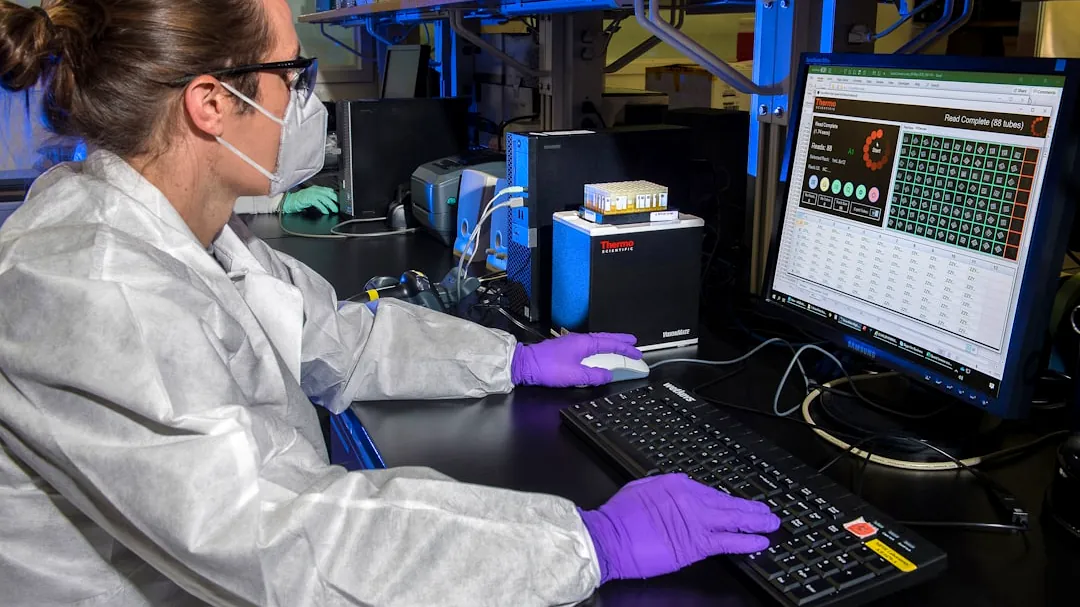
Whole‑genome sequencing (WGS) of more than 9,000 cancer patients has revealed that colorectal tumors—alone among common tumor types—consistently host a distinct, tissue‑resident microbial community. That pattern, validated across cohorts and stringent contamination controls, points to a concrete diagnostic and prognostic signal rather than a lab artifact.
What the sequencing actually showed
Dr. Abraham Gihawi and colleagues at the University of East Anglia analyzed WGS data from over 9,000 cancer patients and found that only colorectal tumors reliably carried a specific microbial signature. The result was not a marginal enrichment: colorectal samples repeatedly grouped by their microbial content, while other tumor types did not show a comparable, reproducible community.
The teams applied strict contamination filtering and cross‑cohort validation so the microbes identified are best interpreted as tissue‑resident. That methodological rigor—multiple validation cohorts and controls for low microbial biomass—distinguishes this finding from earlier, less controlled microbiome claims.
How the microbial signal could change diagnosis and prognosis
Using computational pipelines to separate human and microbial reads in WGS, researchers could classify colorectal tumors on the basis of their microbes and develop microbial risk scores that predicted outcomes independently of established clinical and molecular markers. A separate study of 937 colorectal cancer patients found more than 360 microbial species, and linked groups such as Enterobacteriaceae with worse prognosis in specific molecular subtypes.
Beyond colorectal cancer, the studies also reported that particular bacterial species correlated with survival in sarcoma, suggesting microbes can influence—or at least mark—treatment response. Professor Daniel Brewer has highlighted that WGS already uncovers hidden viral agents (for example HPV and HTLV‑1) in tumor tissue; bacterial profiling sits alongside this capability as an additional layer of information.
When to start incorporating microbial profiling and what to expect first
Microbial profiling is most applicable now to research programs and tertiary sequencing labs that already perform tumor WGS. Sensible early use is as an adjunct signal: add microbial read analysis to existing pipelines, flag reproducible species-level findings, and track whether those signals replicate in local cohorts and associate with outcomes or treatment response.
Progression from experimental to clinical use should hinge on three empirical checkpoints: (1) reproducible detection after contamination filtering across independent cohorts, (2) prognostic value that remains after adjusting for stage and molecular subtype, and (3) prospectively demonstrated correlation with treatment response. If a center cannot meet the first two, it should pause before using microbial data for decision‑making.
Concrete checkpoints, stop signals and a quick decision lens
Below is a compact, operational view to help labs and clinicians decide whether to proceed, continue, or stop integrating tumor microbial profiling into practice.
| Checkpoint | Progression signal (go) | Stop signal (pause/reassess) |
|---|---|---|
| Detection reliability | Species replicate across samples and cohorts after contamination control | High variability between replicates or obvious batch effects |
| Prognostic independence | Microbial risk score predicts outcomes independent of stage/molecular subtype | Microbial signals disappear when adjusted for known clinical factors |
| Treatment correlation | Microbiota changes track with therapy response in prospectively followed patients | No consistent link between microbial patterns and response across trials |
In practical terms, meeting the detection and prognostic checkpoints—both demonstrated in the Gihawi analysis (over 9,000 WGS samples) and the complementary 937‑patient colorectal cohort—supports pilot clinical integration. Failure on detection or lack of independent prognostic signal argues for pausing and investing in better contamination controls, deeper sequencing, or broader cohort validation before any clinical action.
Short Q&A for clinicians and lab leads
When is microbial profiling ready for routine use? Not yet for routine clinical decision‑making; it’s ready for structured pilots in centers that already perform WGS and can run contamination controls and validation.
Who benefits most right now? Researchers, translational teams, and tertiary centers aiming to correlate microbe presence with specific therapies or to refine diagnostic algorithms for colorectal cancer.
What immediate red flags should stop implementation? Inconsistent microbial detection between technical replicates, strong batch effects, or microbial associations that vanish after adjusting for stage and subtype.